
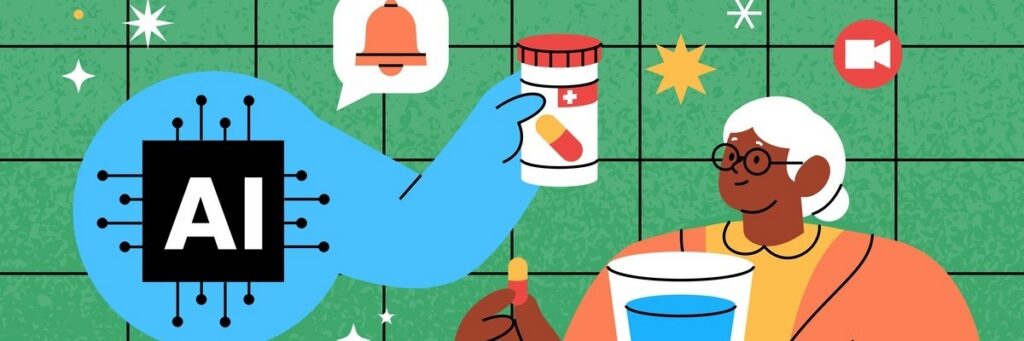
AI does appear to offer real benefits. Many of these are clearly not within my areas of expertise, or even my ability to fully grasp all of what is involved. These benefits include the use of AI to solve complex mathematical problems and to identify/assist in developing new antibiotics, to mention just a few (4). In addition, AI appears to offer benefits in the areas of medicine and mental health, education/training, and research. It is important to keep in mind that AI is a tool, and as with many tools what they are used for, and when, how, and by whom they are used are critical. We will touch on these issues in this and in upcoming blogs. Finally, while it might be overly optimistic, or even naive, it appears that some AI companies are aware of these concerns and are hopefully starting to address them.
One potential benefit of AI may be as an adjunct to, firstline resource, and even alternative to traditional healthcare. Warnings about lack of healthcare providers, including mental health care providers, have proliferated in recent years (5). Recently, there appears to be evidence supporting the use of AI in providing healthcare services. Examples of this in the area of mental health include the successful use of a Therabot program to treat anxiety and depression (6). It is important to note that this is one study, with an extremely meticulously designed bot, administered to a small sample of college students. However, there are other studies suggesting that therapytype bots and specific AI designed tools may be a useful adjunct to mental health services (7). Examples of these range from Apps to support and facilitate adherence to therapy, to tools designed to improve diagnostic accuracy (7).
AI appears to be a potentially important resource for physicians and other healthcare providers. A number of physicians have written about how AI has become a valuable tool for them in terms of serving as a type of collegial consult where they can check or validate their thinking, explore other options, and be alerted to alternative interpretations/diagnoses (8,9). In addition, there are more scholarly reviews that cite the benefits of AI in improving diagnosis and treatment planning (10). These include studies noting that AI was able to exceed physician performance in terms of making diagnoses (11 ) and interpreting some test results (11). However, advocates for AI in medicine have called for a careful and thoughtful approach to using AI, and for “guardrails” regarding AI use (8,9,10). Robert Wachter, M.D., a physician and leading advocate for the use of AI in healthcare actually references the Joe Biden quote, “don’t compare me to the almighty, compare me to the alternative” in his New York Times op-ed (8a). He astutely notes that we are prone to focusing on the errors of AI, highlighting them, just as accidents with self-driving cars receive far more scrutiny than the many accidents that occur with human drivers and result from human error. In addition, Wachter notes that AI is here to stay and that many people are turning to AI Chatbots for mental health support and services, as well as for guidance on medical concerns. While widespread use of a product/service does not validate its utility it clearly shows that we need to consider ways in which we can effectively use AI in healthcare.
AI can also be a resource for therapists, physicians and other healthcare providers, as well as for the general public. There are higher quality sites, such as Open Evidence (12) which rely on empirical (research based) evidence to provide information on a wide range of health related issues including mental health concerns. In an op-ed, written by a physician, the writer explains how she used an AI Chatbot to learn more about the results of medical tests she received and to garner additional recommendations and advice that her doctor was not providing (13). This physician writes about how the Chatbot not only answered her questions but asked questions, offered advice that the doctor/writer found helpful, and was even empathetic and encouraging. However, the writer/physician cautions readers, noting that she has the expertise to know when to disregard the advice offered by the Chatbot. This is an important caveat as there is well documented evidence of Chatbots hallucinating, making up research and evidence. Recently a tragic story was featured in a wide range of news sources, about a man who was given and subsequently followed bad advice, from a Chatbot, which resulted in his delaying treatment, suffering needlessly, and endangering his health and life (14). However, if one approaches AI thoughtfully, and perhaps even questions its answers, there is potential that AI will be a useful resource for many patients and potential patients. As Wachter suggests (8a) that when evaluating AI we need to remember that healthcare providers are far from infallible and just because a human being with a degree confidently tells us something it does not mean that they are always right.
In terms of mental healthcare, specifically therapy services and adjuncts, the evidence regarding the potential benefits of AI have been identified but more emphasis has been placed on the risks associated with Chatbots (see previous blogs on the topic along with a multiplicity of articles sounding the alarm about the risks associated with Chatbot use) (15). However, it is important to keep in mind that many people are turning to AI, specifically to Chatbots, for emotional support and guidance, and find this guidance helpful (14b). It appears reasonable to assert that the value of AI in mental healthcare requires more research and study. At present, we may be wise to limit ourselves (therapists) to using AI to help us clarify our thinking, to serve as a resource to aid our diagnostic efforts and treatment planning. Recently, I tested this approach (clearly this is not a scientific study but an anecdotal description of one way clinicians can utilize AI that may be helpful). Specifically, my informal tests of AI involved asking both Open Evidence and Gemini different questions about mental health treatment and diagnosis. In one instance I asked for recommendations regarding what to do regarding a client not making progress in therapy. The recommendations, especially those provided by Open Evidence, were more complete than some professional articles on the same topic (16). While none of this suggests that we should defer to AI, it does suggest that with careful use, AI may offer valuable contributions to our (healthcare providers) thinking about our work.
All of the authors and researchers cited in this blog (along with many other writers and healthcare professionals) assert that AI has the potential to be a valuable resource for patients and healthcare providers. However, many note the risks associated with relying on AI and all argue for a thoughtful and careful use of AI and for the creation of guardrails for AI use. The prevalence of AI clearly indicates that we need to focus on how we can more effectively utilize AI in our work, in a safe and thoughtful manner. In an upcoming blog I will discuss ways we (as healthcare professionals and healthcare consumers) can hopefully use AI, in a thoughtful way, to support our work.
References:
- See the NYT article detailing the Hugging Face incident. https://www.nytimes.com/2026/08/24/technology/hugging-face-open-source-ai-attack.html
- See additional articles, and there are many, on the risks associated with AI agents “going rouge,”, i.e., taking actions.
- https://www.nytimes.com/2026/10/01/technology/ai-rogue-agents-liability.html
- A recent podcast on risks of new AI offerings: https://www.nytimes.com/2026/10/02/podcasts/hardfork-regulation-agents-muse.html
- See articles and podcasts discussing the warnings about the risks of AI, including those by a former Anthropic employee, who made news by going public with concerns that AI could endanger human existence.
- See the New York Times article discussing the concerns highlighted by this employee and other employees of AI companies: https://www.nytimes.com/2026/09/09/technology/anthropic-researchers-raise-alarm.html
- Examples of AI solving previously unsolvable mathematical problems, identifying a new antibiotic and other innovations have been cited in recent news stories.
- The shortage of therapists and physicians have been repeatedly cited in news stories.
- Dartmouth study of Therabot. https://home.dartmouth.edu/news/2025/03/first-therapy-chatbot-trial-yields-mental-health-benefits
- Several recent articles discuss the potential benefits of AI use in providing mental health services. These include a 2024 review, Enhancing mental health with Artificial Intelligence: Current trends and future prospects, by Olawade et al, of AI related mental health programs: https://www.sciencedirect.com/science/article/pii/S2949916X24000525 as well as a NIH review of AI in mental healthcare, which takes a more cautious tone, but notes the potential benefits of AI in mental healthcare, Use of Artificial Intelligence in Mental Healthcare, Health Psychology, and Related Research: A Narrative Review to Address Challenges and Opportunities by Rahman et al. https://pmc.ncbi.nlm.nih.gov/articles/PMC12665507/
- See the work of Robert Wachter, M.D., who has written extensively on the contributions that AI can make to medicine.
- A short op-ed on the topic can be found at: https://docs.google.com/document/d/1J-P2SbTm1E5jJa17vjWctIa95awt11BWzLSLTHRS0kU/edit?tab=t.0
- More detailed work by Dr. Wachter is available/easily accessed through his substack and also his website https://www.robertwachtermd.com/
- His book, A Giant Leap, on how AI has the potential/ability to transform medicine offers an in-depth examination of his ideas. A link to the book is available on his website.
- See: Being a Doctor Will Never Be the Same After A.I. by Rachel Bedard, Sept. 25, 2026
https://www.nytimes.com/2026/09/25/opinion/ai-doctor-medical-students.html
- A review article summarizing the benefits and potential benefits of AI for healthcare. The Impact of Artificial Intelligence on Healthcare: A Comprehensive Review of Advancements in Diagnostics, Treatment, and Operational Efficiency by Faiyazuddin et al, 2024. https://pmc.ncbi.nlm.nih.gov/articles/PMC11702416/pdf/HSR2-8-e70312.pd
- Articles citing the efficacy of AI in improving diagnosis have been noted in popular press.Examples of studies noting the effectiveness of AI in diagnosis and test interpretation include.
- See a recent New York Times article on this topic: https://www.nytimes.com/2026/06/22/health/artificial-intelligence-heart-damage.html
- See this article in the Journal Science that detailed how AI did a better job of making diagnoses that ER physicians. https://www.science.org/content/article/ai-starting-beat-doctors-making-correct-diagnoses?referrer=https%3A%2F%2Fwww.google.com%2F
- See https://pmc.ncbi.nlm.nih.gov/articles/PMC12680421/ for the actual article
- It is important to note that there have been critiques of this and other research arguments regarding whether AI really is a better diagnostician than actual physicians https://www.forbes.com/sites/jessepines/2026/05/22/did-ai-really-beat-er-doctors-at-diagnosis-heres-what-the-study-showed/
- See a substack by Robert Wachter on this topic: https://docs.google.com/document/d/1BC4Es0zlD5g4is46nxRxSPOFbwzeG6Uf6Hu95LMPVRo/edit?tab=t.0
- However, there have been additional studies supporting the effectiveness of AI in making accurate diagnoses: https://www.theguardian.com/technology/2026/apr/30/ai-outperforms-doctors-in-harvard-trial-of-emergency-triage-diagnoses
- Open Evidence: a site for healthcare professionals which provides information on a wide range of healthcare issues and concerns. The information on this site is based on peer reviewed research. Open Evidence is one of a growing number of sites that provide information to physicians.
- Doctors, This Is Why Our Patients Are Using ChatGPT May 24, 2026 https://www.nytimes.com/2026/05/24/opinion/doctor-ai-chatgpt.html
- See the New York Times article on how a man’s reliance put his life at risk: https://www.nytimes.com/2026/07/22/well/openai-chatgpt-health-lawsuit.html
- There are many articles that discuss the risks of AI in mental healthcare and in treating/responding to mental health.
- A recent, 2025, review of the topic, by Keith Head,Minds in Crisis: How the AI Revolution is Impacting Mental Health, in the Journal highlights many of the risks that have been discussed/raised. https://www.mentalhealthjournal.org/articles/minds-in-crisis-how-the-ai-revolution-is-impacting-mental-health.pdf
- Other articles have also highlighted that Chatbots are widely used for support and guidance, while also highlighting concerns both the appeal of Chatbots and the risks of relying on them for mental health care: https://www.apa.org/topics/artificial-intelligence-machine-learning/discussing-ai-use-therapy
- I compared the findings from Open Evidence and Gemini to a number of articles I found online offering ideas and recommendations on what to do when the therapist feels that therapy is not progressing. For example: https://www.psychologytoday.com/us/blog/the-psychology-of-relationships-and-emotional-intelligence/202503/what-to-do-if-therapy-isnt